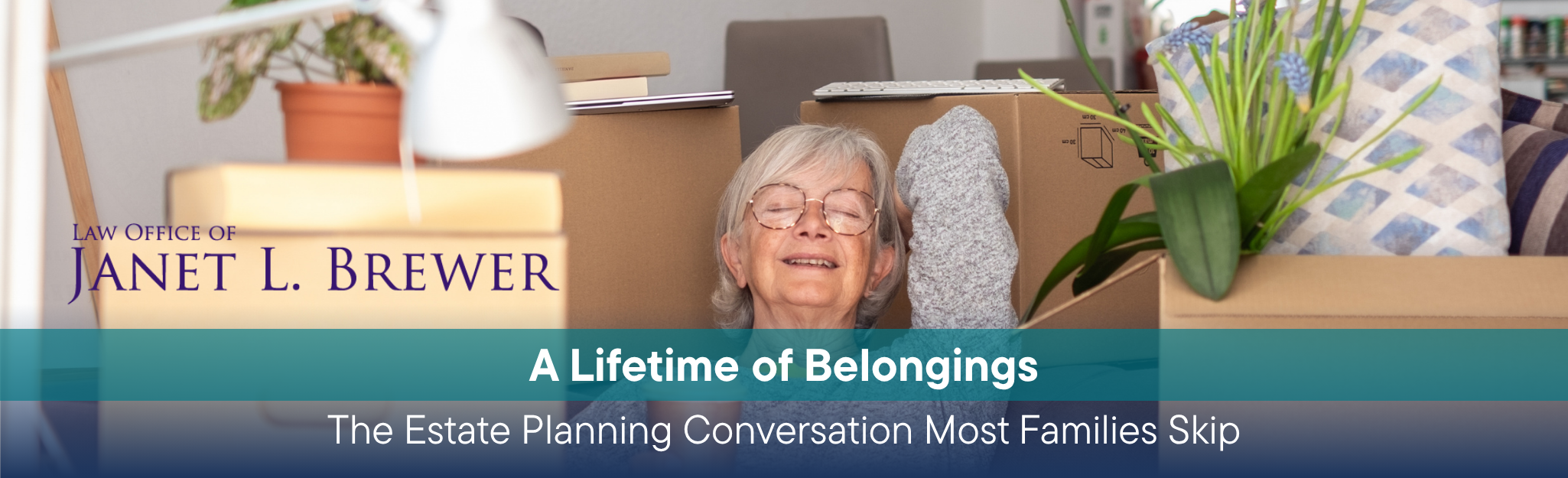
A lifetime of meaningful possessions is something to be proud of. The homes we have built, the collections we have curated, the belongings passed down from people we loved — these things tell a story. But thoughtful planning around those possessions can make an enormous difference — for you now, and for the people you leave behind. The question is not just what we own. It is what happens to it later, who is left to sort through it, and what it may cost them to do so.
The Estate Planning Side of Accumulated Belongings
When someone passes away, their personal property does not simply disappear. It becomes someone else’s responsibility — and that responsibility can be more complicated, time-consuming, and costly than most families anticipate.
Potential complications that may arise during estate administration include:
- Missed or undiscovered assets. When family members or executors are inventorying a home under time pressure, something important may be overlooked or mistaken for items of little value.
- Delays in the probate process. Estate administration typically takes six to twelve months or longer. If a home contains decades of accumulated belongings, sorting, cataloging, and distributing personal property can add weeks or months to that timeline.
- Difficulty determining value. Personal property often needs to be appraised after someone passes. Disorganized belongings can make it harder to identify what is there, which may lead to overlooked valuables or inaccurate assessments.
- Higher administrative costs. Professional estate cleanout services and the work of cataloging personal property can run into the thousands of dollars — before expenses such as junk removal, estate sale commissions, or auctioneer fees.
- Delays in preparing or selling real estate. Homes often cannot be listed for sale until the contents have been cleared. Excess belongings can push back the typical timeline and increase carrying costs for utilities, insurance, and property taxes.
- Trouble locating essential documents. Wills, trusts, insurance policies, account statements, and passwords may be misplaced or buried among household belongings, complicating estate administration at exactly the wrong moment.
- Safety concerns that may limit the ability to age in place. Most older adults want to remain in their homes as they age, but the home must be able to accommodate them. An excess of belongings can create fall hazards, block exits, and interfere with routine maintenance.
The Burden That Excess Belongings Place on Loved Ones
At some point, many of us face the task of walking through a deceased parent’s home — empty in one sense, but not in another. The person is gone, but a lifetime of possessions remains.
Going from room to room, drawer to drawer, and box to box can be part of the healing process. Handling familiar objects can surface long-forgotten memories and bring a measure of closure. It can also take more time and coordination than families anticipate. What is left behind is often more than anyone expected, and it is not always clear whose responsibility it is to sort through it all.
The emotional weight of that process can also create tension within families. One person often ends up shouldering most of the work. Sentimental items can spark disagreement among siblings. Deciding what to keep and what to let go of can bring guilt and second-guessing even when relationships are strong.
Conversations about who gets what are best had while possessions are still yours — not after they have been left in a kind of personal property limbo where uncertainty can give rise to conflict and resentment.
The Great Wealth Transfer Is Also a Great Stuff Transfer
Over the next two decades, an estimated $84 trillion in assets is expected to change hands from older generations to their heirs. Much of the conversation around this transfer focuses on financial wealth — but a more immediate and open-ended question is what happens to the physical possessions accumulated alongside it.
Baby boomers have among the highest homeownership rates of any generation and have spent decades filling those homes. As homes have grown larger, so have their contents — Americans now rent more than two billion square feet of self-storage space. When someone downsizes or passes away, those belongings must go somewhere. While heirs may not want them, they are often still tasked with going through them.
The financial and estate planning consequences of that process are real — and worth planning for now rather than leaving to the people you care about most.
Practical Strategies for Managing What You Leave Behind
You do not need to adopt a minimalist mindset or part with things that matter to you. The goal is not extreme downsizing — it is thoughtful management. A few practical starting points:
- Take stock of what you have. A basic inventory with notes and photos of key belongings gives your family and fiduciaries a clear baseline. It does not need to be elaborate — even a simple list can prevent important items from being overlooked.
- Organize as you go. How belongings are organized can matter as much as how many there are. Labeling boxes, grouping related items, and keeping a photo record of collections or valuables can save significant time and effort during estate administration.
- Let family members express preferences now. Sorting what to keep, donate, or pass on is easier when loved ones can weigh in while you are still here. An informal conversation — or an invitation to choose meaningful items — can resolve future disagreements before they start.
- Identify items that may warrant an appraisal. Some belongings carry more financial value than their owners realize. If you suspect an item may be worth something, a professional appraisal can help ensure it is not undervalued or inadvertently discarded.
- Choose the right person to handle your estate. Your executor or trustee will be responsible for managing everything you leave behind. Consider carefully whether the person you have named has the time, temperament, and practical capacity for the role.
- Do not hesitate to bring in help. Professional organizers, estate sale companies, and cleanout services exist to make this process more manageable. Seeking assistance is simply a practical way to reduce stress and protect what matters.
Schedule Your Right Fit Conversation
What you leave behind is as much a part of your estate plan as the documents themselves. For California families navigating the practical and financial dimensions of a lifetime of accumulated assets, thoughtful planning can make an enormous difference for the people who come after you. The Janet L. Brewer team can help you think through not just the documents, but the broader picture of what your estate will involve. Your Right Fit Conversation is a 30-minute getting-to-know-you meeting designed to help us understand your situation and determine whether our firm is the right fit for your needs.
Call us at (650) 325-8276 or complete our online contact form to schedule your meeting.